Iran war: Tankers hit near Hormuz as Tehran offers U.S. reopening plan
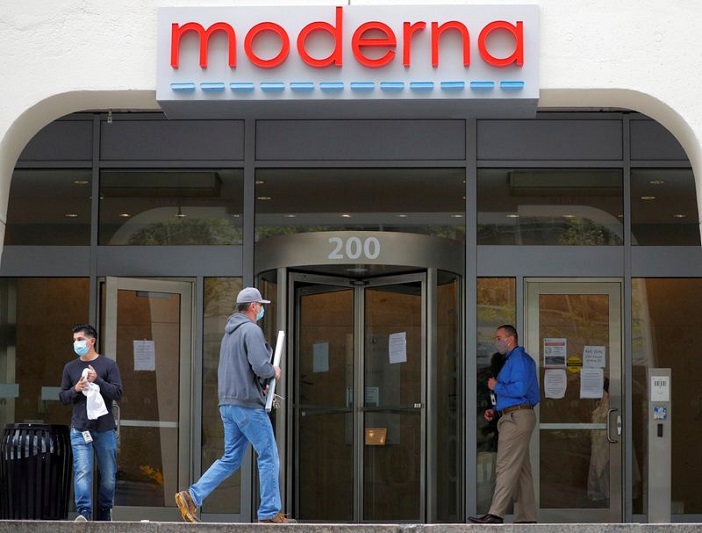
Moderna Inc. (NASDAQ:MRNA) stands at a critical juncture as the biotechnology company transitions from its COVID-19 vaccine success toward a diversified pipeline of treatments and vaccines. The company’s strategic focus on cost reduction, manufacturing expansion, and pipeline advancement presents both opportunities and challenges for investors evaluating the stock’s potential in an evolving healthcare landscape.
With a market capitalization of $18.24 billion and shares trading at $45.89, the stock has delivered impressive returns of 82% over the past year. According to InvestingPro analysis, the stock currently appears slightly overvalued relative to its Fair Value estimate. Investors can access comprehensive valuation metrics and exclusive insights on MRNA through the platform’s detailed Pro Research Report, available for this and 1,400+ other US equities.
Financial guidance and operational efficiency
Moderna announced updated financial guidance during its analyst day in November 2025, projecting revenue growth of up to 10% in 2026. This forecast comes as the company implements significant cost reduction measures aimed at improving its financial position. The company has narrowed its 2025 guidance while simultaneously reducing operating expenses and increasing cash reserves, signaling a more disciplined approach to capital management.
The cost-cutting initiatives represent a strategic shift for Moderna as it seeks to balance investment in research and development with the need to demonstrate a path toward profitability. Analysts note that these operational improvements could enhance long-term financial health, though the company continues to face near-term profitability challenges. The company generated $2.23 billion in revenue over the last twelve months, though it reported a gross profit margin of negative 70%, reflecting the current operational headwinds. On a positive note, the company maintains a healthy current ratio of 2.41, indicating solid liquidity to meet short-term obligations.
Earnings per share estimates for the fiscal year ending in 2026 stand at negative $7.95, with projections for the following fiscal year at negative $6.25. These figures underscore the company’s current state of operating at a loss, a common characteristic among biotechnology firms investing heavily in pipeline development. The actual EPS for the last twelve months stood at negative $8.16. Notably, InvestingPro Tips highlight that Moderna holds more cash than debt on its balance sheet, providing financial flexibility during this investment-intensive phase. The platform offers 8 additional exclusive tips for MRNA subscribers.
COVID-19 vaccine market position
The company’s COVID-19 vaccine business continues to demonstrate strong performance, with Moderna capturing a 42% market share in the United States as of the third quarter of 2025. This robust sales performance contributed to an earnings beat in the third quarter, exceeding analyst expectations and reinforcing the vaccine’s competitive position in the domestic market.
The sustained demand for COVID-19 vaccines provides Moderna with a reliable revenue stream as the company works to diversify its product portfolio. The vaccine’s market share represents a significant achievement in a competitive landscape that includes established pharmaceutical companies with extensive distribution networks and manufacturing capabilities.
Pipeline development and clinical progress
Moderna’s research pipeline extends well beyond COVID-19, with multiple programs advancing through clinical development. The company’s oncology portfolio has emerged as a focal point for future growth, particularly the melanoma treatment mRNA-4157. Phase 3 data for this investigational therapy is expected in the second half of 2026, representing a key milestone that could validate Moderna’s mRNA platform in cancer treatment.
The company has also reported encouraging early-stage data for mRNA-4359 combined with pembrolizumab, showing a 67% objective response rate in fourth-line or higher PD-L1 positive melanoma patients. This response rate compares favorably to historical data and suggests potential for successful treatment outcomes in difficult-to-treat patient populations. Interim Phase 3 data in adjuvant melanoma is anticipated in 2026, along with Phase 1/2 data for several other oncology pipeline assets.
Beyond oncology, Moderna has filed for regulatory approval of influenza vaccines and a combination flu/COVID vaccine. The anticipated global approvals for the flu/COVID combination vaccine could open new revenue opportunities and leverage the company’s existing commercial infrastructure. Analysts identify these vaccine programs as near-term growth drivers that could materialize in 2027 and beyond.
The company has also initiated a Phase 2 study for a new investigational therapy in first-line non-small cell lung cancer, expanding its oncology footprint into one of the most prevalent cancer types. This diversification across multiple cancer indications demonstrates Moderna’s commitment to building a comprehensive oncology franchise.
Manufacturing expansion strategy
Moderna is pursuing a global manufacturing expansion designed to enhance production capabilities and market reach. This strategic initiative aims to improve distribution efficiency and support the company’s growing pipeline of products. The expansion could prove particularly valuable as new vaccines and treatments receive regulatory approval and require scaled production.
The manufacturing investments reflect Moderna’s confidence in its pipeline and the long-term demand for mRNA-based therapeutics. Analysts suggest that enhanced production capabilities may lead to improved margins over time as the company achieves greater manufacturing efficiency and economies of scale.
Market dynamics and competitive landscape
The biotechnology sector faces ongoing challenges related to drug development timelines, regulatory approval processes, and market competition. Moderna operates in a space where success depends heavily on clinical trial outcomes and the ability to demonstrate both safety and efficacy in rigorous studies.
The company’s mRNA platform technology provides a foundation for rapid development of new treatments and vaccines, a capability that proved valuable during the COVID-19 pandemic. This technological advantage positions Moderna to respond quickly to emerging health threats and to pursue multiple therapeutic areas simultaneously.
The competitive environment includes both established pharmaceutical companies and emerging biotechnology firms, all vying for market share in lucrative therapeutic categories. Moderna’s ability to maintain its COVID-19 vaccine market position while advancing new products will be critical to its long-term success.
Bear Case
Can Moderna overcome persistent profitability challenges?
The company’s negative earnings per share projections raise questions about the timeline to profitability. With estimated losses of $7.95 per share in fiscal year 2026 and $6.25 per share in fiscal year 2027, Moderna faces an extended period of operating losses. This financial profile is not uncommon for biotechnology companies with substantial research and development expenses, but it creates pressure to demonstrate clear progress toward sustainable profitability.
The path to positive earnings depends on multiple factors, including the success of pipeline programs, the maintenance of COVID-19 vaccine market share, and the effectiveness of cost reduction initiatives. Any delays in clinical development or regulatory setbacks could extend the timeline to profitability and strain financial resources. Investors must weigh whether the company’s cash reserves and revenue from existing products provide sufficient runway to reach key milestones.
What risks does pipeline dependency create?
Moderna’s future growth relies heavily on the successful development and commercialization of pipeline products, particularly in oncology. Clinical trials carry inherent risks, including the possibility of unexpected safety issues, insufficient efficacy, or failure to meet primary endpoints. The company’s melanoma program, while showing promising early results, must still demonstrate success in Phase 3 trials, which involve larger patient populations and more rigorous statistical requirements.
Regulatory approval represents another significant hurdle. Even successful clinical trials do not guarantee approval, as regulatory agencies may require additional data or identify concerns that delay or prevent market entry. The company’s diversification across multiple programs provides some risk mitigation, but the concentration of near-term catalysts in 2026 creates a scenario where multiple setbacks could significantly impact the investment thesis.
Bull Case
How could oncology pipeline success transform the business model?
The potential approval of mRNA-4157 for melanoma treatment would represent a transformative milestone for Moderna, validating its mRNA platform in oncology and opening a substantial new market opportunity. Melanoma represents a significant unmet medical need, particularly in adjuvant settings where preventing recurrence is critical. A 67% objective response rate in heavily pre-treated patients suggests meaningful clinical benefit that could translate into commercial success.
Success in melanoma could also pave the way for expansion into other cancer types, leveraging the company’s platform technology to develop personalized cancer vaccines. The initiation of studies in non-small cell lung cancer demonstrates this strategy in action. If Moderna can establish itself as a leader in cancer immunotherapy, the addressable market expands dramatically beyond infectious diseases, potentially supporting multiple blockbuster products.
Will operational improvements accelerate the path to profitability?
The company’s cost reduction initiatives and operational efficiency improvements could significantly accelerate the timeline to profitability. By reducing operating expenses while maintaining investment in high-priority pipeline programs, Moderna may achieve positive cash flow sooner than current projections suggest. The projected 10% revenue growth in 2026 provides a foundation for improved financial performance, particularly if combined with continued cost discipline.
The expansion of manufacturing capabilities could also drive margin improvements as the company achieves greater economies of scale. As new products launch and production volumes increase, fixed costs can be spread across a larger revenue base, improving profitability metrics. The combination of revenue growth, cost management, and operational leverage creates a scenario where the company could surprise investors with faster-than-expected progress toward sustained profitability.
SWOT Analysis
Strengths
- Dominant 42% market share in U.S. COVID-19 vaccine market
- Proven mRNA platform technology with rapid development capabilities
- Strong cash position following cost reduction initiatives
- Promising oncology pipeline with encouraging clinical data
- Established commercial infrastructure and distribution networks
Weaknesses
- Persistent negative earnings with losses projected through fiscal year 2027
- Heavy dependence on COVID-19 vaccine revenue
- Limited approved product portfolio beyond COVID-19
- Ongoing profitability challenges despite cost reduction efforts
Opportunities
- Multiple pipeline programs approaching key milestones in 2026
- Potential market expansion through flu/COVID combination vaccine
- Global manufacturing expansion to enhance production capacity
- Oncology market entry with personalized cancer vaccines
- Platform technology applicable to multiple therapeutic areas
- Revenue growth potential of up to 10% in 2026
Threats
- Clinical trial risks including potential failures or delays
- Regulatory approval uncertainties for pipeline products
- Intense competition in both vaccine and oncology markets
- Declining COVID-19 vaccine demand over time
- Dependence on successful pipeline execution for future growth
- Extended timeline to profitability creating financial pressure
Analyst Targets
Barclays Capital Inc. maintained an Equal Weight rating with a price target of $25.00 on November 21st, 2025, citing the company’s updated financial guidance, cost reduction initiatives, and anticipated revenue growth of up to 10% in 2026.
Barclays Capital Inc. maintained an Equal Weight rating with a price target of $25.00 on November 7th, 2025, following the company’s third quarter earnings beat driven by strong COVID-19 vaccine sales and narrowed 2025 guidance.
Barclays Capital Inc. maintained an Equal Weight rating with a price target of $31.00 on October 20th, 2025, highlighting promising subgroup data for mRNA-4359 combined with pembrolizumab showing a 67% objective response rate in melanoma patients.
This analysis is based on information available from October 2025 through November 2025.
InvestingPro: Smarter Decisions, Better Returns
Gain an edge in your investment decisions with InvestingPro’s in-depth analysis and exclusive insights on MRNA. Our Pro platform offers fair value estimates, performance predictions, and risk assessments, along with additional tips and expert analysis. Explore MRNA’s full potential at InvestingPro.
Should you invest in MRNA right now? Consider this first:
Investing.com’s ProPicks, an AI-driven service trusted by over 130,000 paying members globally, provides easy-to-follow model portfolios designed for wealth accumulation. Curious if MRNA is one of these AI-selected gems? Check out our ProPicks platform to find out and take your investment strategy to the next level.
To evaluate MRNA further, use InvestingPro’s Fair Value tool for a comprehensive valuation based on various factors. You can also see if MRNA appears on our undervalued or overvalued stock lists.
These tools provide a clearer picture of investment opportunities, enabling more informed decisions about where to allocate your funds.
This article was generated with the support of AI and reviewed by an editor. For more information see our T&C.


