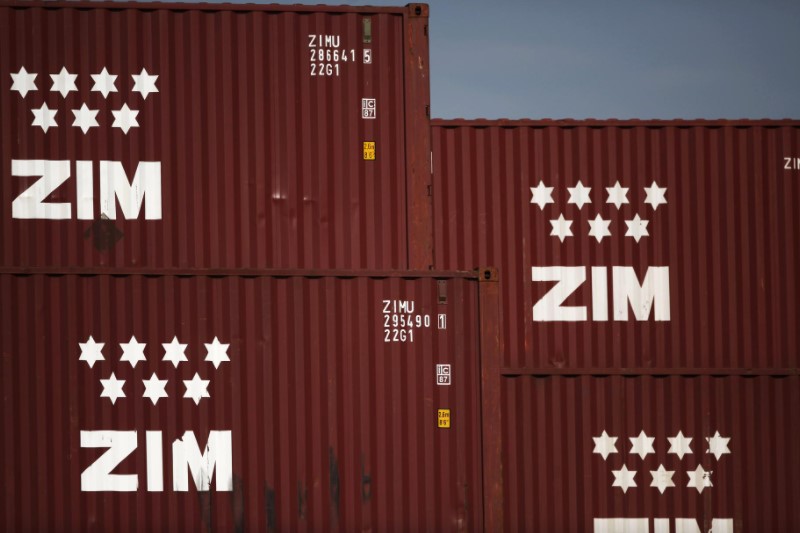
ZIM Integrated Shipping Services Ltd. operates within a challenging environment as the container shipping industry navigates uncertain trade dynamics and shifting rate structures. The Israel-based carrier, which falls under the Industrials sector within European Transportation, recently reported third-quarter financial results that met market expectations while simultaneously narrowing its forward guidance in ways that signal potential headwinds ahead.
The company’s stock trades on the New York Stock Exchange under the ticker NYSE:ZIM at a current price of $25.55, which InvestingPro analysis suggests is slightly overvalued relative to its Fair Value estimate. Recent analyst coverage has raised questions about the carrier’s ability to maintain profitability amid deteriorating rate environments and potential leverage concerns tied to geopolitical developments.
Recent financial performance and earnings outlook
ZIM’s third-quarter results for fiscal year 2025 showed adjusted earnings before interest, taxes, depreciation, and amortization of $593 million, with earnings before interest and taxes reaching $260 million. These figures came in slightly above Bloomberg consensus estimates, suggesting the company maintained operational discipline during the period. Despite the challenging outlook ahead, the stock currently trades at a P/E ratio of just 6.43, reflecting investor concerns about future profitability.
The earnings per share outlook presents a more complex picture. Analysts project first fiscal year EPS ranging from 2.57 to 3.11, depending on the modeling assumptions used. The more concerning projection relates to the second fiscal year, where EPS estimates turn sharply negative, ranging from -2.84 to -3.29. This anticipated decline in profitability reflects expectations of deteriorating market conditions and rate pressures that could materially impact the company’s bottom line.
For the fourth quarter of fiscal year 2025, the implied EBITDA guidance sits within a range of $150 million to $350 million. The midpoint of this range suggests a significant sequential decline from third-quarter performance, pointing toward weaker freight rates in the period. Analysts note that the fourth-quarter outlook indicates negative EPS for the period, which would mark a substantial shift from earlier quarters.
Leverage concerns and Red Sea dynamics
A central concern in recent analyst coverage centers on ZIM’s leverage position, particularly in scenarios where Red Sea shipping routes fully reopen. Current analysis suggests the company’s leverage ratio could exceed 3.0 times if normal operations resume through the Red Sea corridor, up from the current debt-to-equity ratio of 1.43. This level of indebtedness would place the company in a more vulnerable financial position, limiting its flexibility to weather market downturns or invest in strategic initiatives.
For investors seeking deeper insights into ZIM’s financial health and risk profile, InvestingPro offers exclusive access to over 10 additional ProTips, comprehensive Fair Value analysis, and detailed financial health scores that help assess the company’s ability to navigate these challenges.
The Red Sea situation represents both a operational and financial consideration for ZIM. Geopolitical tensions in the region have disrupted traditional shipping routes, forcing carriers to make longer voyages around Africa’s southern cape. While this has supported freight rates by effectively reducing available capacity, a reopening of the Red Sea would add capacity back to the market while simultaneously increasing ZIM’s leverage exposure.
The relationship between route normalization and financial stress creates a paradoxical situation where improved operational conditions could actually weaken the company’s balance sheet position. This dynamic underscores the complexity of the current environment for container shipping operators.
Rate environment and capacity management
ZIM’s rate modeling for the fourth quarter incorporates a historical correlation between the one-month delayed World Container Index and the company’s average rate quarter-over-quarter evolution by trade lane. This methodology suggests a more data-driven approach to forecasting, though the resulting projections point toward softer rates in the near term.
The company faces limited capacity flexibility as it integrates new vessels into its fleet. While these newer ships promise unit cost savings through improved fuel efficiency and larger carrying capacity, the timing of their introduction coincides with a potentially weakening rate environment. This mismatch between capacity additions and market conditions could pressure margins if demand fails to keep pace with supply growth.
Industry-wide capacity management strategies remain a focal point for maintaining rate stability. Options available to carriers include speed adjustments to effectively reduce capacity, idling vessels during weak demand periods, and scrapping older, less efficient ships. ZIM’s ability to participate in these industry coordination efforts while managing its own fleet composition will influence its competitive position.
Trade uncertainties and demand outlook
The demand picture for the fourth quarter of fiscal year 2025 and into fiscal year 2026 remains clouded by trade policy uncertainties. Tensions between the United States and China continue to create unpredictability in cargo volumes, as shifting tariff policies and trade restrictions can rapidly alter shipping patterns and demand levels.
These geopolitical headwinds affect not only total volumes but also the specific trade lanes that generate the highest margins for carriers. Disruptions to established trade flows can force carriers to redeploy vessels to less profitable routes or accept lower rates to maintain utilization levels.
The broader question of whether current shipping demand represents sustainable growth or temporary inventory restocking also weighs on forward projections. Container shipping has historically shown cyclical patterns tied to global economic growth, and the current environment includes mixed signals about the strength of underlying consumer demand in major economies.
Dividend policy and capital allocation
Analyst coverage suggests that the third-quarter earnings per share may represent the last quarterly dividend payment for an extended period. This expectation reflects the anticipated shift to negative earnings in subsequent quarters and the need to preserve cash in light of leverage concerns. Notably, the stock currently offers a dividend yield of 13.78%, though this reflects historical payments that may not continue given the challenging outlook ahead.
The potential suspension of regular quarterly dividends marks a significant change for a company that had been returning capital to shareholders. The decision to halt dividends, while prudent from a financial stability perspective, removes one of the attractions for income-focused investors and may influence the stock’s valuation multiple.
Questions also arise regarding special dividends, which ZIM has utilized in the past during periods of strong cash generation. Analysts characterize any special dividend issuance under current conditions as a risky move, given the leverage profile and uncertain earnings outlook. This suggests that capital allocation priorities have shifted decisively toward balance sheet preservation rather than shareholder distributions.
Fleet modernization and cost structure
ZIM’s investment in a new fleet presents opportunities for unit cost savings that could partially offset revenue pressures. Modern container ships offer improved fuel efficiency, lower maintenance requirements, and better environmental performance compared to older vessels. These operational improvements translate directly to reduced costs per container moved.
The magnitude of potential savings depends on the pace of fleet renewal and the company’s ability to phase out older, less efficient vessels. The transition period involves managing both old and new assets, which can temporarily increase complexity and costs before the full benefits materialize.
Cost management extends beyond fleet efficiency to include port operations, inland transportation connections, and administrative expenses. The company’s ability to extract savings across these areas while maintaining service quality will influence its competitive position during periods of rate pressure.
Bear Case
Can ZIM manage its leverage if Red Sea trade routes reopen?
The reopening of Red Sea shipping routes presents a significant financial risk for ZIM, as analysts project the company’s leverage could exceed 3.0 times under this scenario. This level of indebtedness would constrain the company’s financial flexibility at a time when the container shipping industry faces multiple headwinds. High leverage limits management’s ability to invest in strategic initiatives, weather unexpected market downturns, or compete effectively for business when pricing pressure intensifies.
The mechanics of this leverage increase relate to both the numerator and denominator of the debt-to-EBITDA calculation. A Red Sea reopening would likely pressure freight rates as effective capacity increases with shorter voyage times. This would reduce EBITDA, the denominator in the leverage calculation. Simultaneously, the company’s debt levels remain fixed or could increase if operational changes require additional working capital. The combination creates a leverage spiral that could prove difficult to reverse without either a significant market recovery or asset sales to reduce debt.
The timing of a potential Red Sea reopening remains uncertain, but the financial vulnerability it would create suggests ZIM operates with limited margin for error. Companies with leverage ratios above 3.0 times typically face higher borrowing costs, more restrictive covenants, and reduced strategic options. For a cyclical business like container shipping, entering a down cycle with elevated leverage has historically led to distressed situations.
Will declining rates and negative earnings pressure the company’s financial stability?
The projection of negative earnings per share for the second fiscal year represents a fundamental shift in ZIM’s profitability trajectory. Moving from positive earnings in the current fiscal year to losses in the following year indicates that the company faces revenue declines that its cost structure cannot fully absorb. This earnings deterioration occurs despite efforts to reduce unit costs through fleet modernization and capacity management.
Negative earnings create multiple pressures on financial stability. Cash generation weakens, making it more difficult to service debt, fund operations, and maintain the asset base. The anticipated suspension of quarterly dividends reflects this cash flow pressure and the need to preserve liquidity. Companies operating at a loss must either draw on cash reserves, increase borrowing, or sell assets to fund ongoing operations.
The fourth-quarter EBITDA guidance of $150 million to $350 million, with expectations clustering toward the midpoint, suggests a sequential decline of more than 50% from third-quarter levels. If this deterioration continues into fiscal year 2026, the company could face questions about its ability to maintain its current operating model. Container shipping has historically been a capital-intensive business with high fixed costs, making it vulnerable to volume and rate declines that cannot be quickly offset through cost reductions.
Bull Case
Could new fleet cost savings offset revenue pressures?
ZIM’s investment in modern vessels provides a structural cost advantage that could help the company maintain profitability even in a softer rate environment. New container ships deliver significantly better fuel efficiency than older vessels, and fuel represents one of the largest variable costs in shipping operations. Depending on the size and efficiency specifications of the new fleet, fuel savings alone could reduce unit costs by 15% to 25% compared to older vessels.
Beyond fuel efficiency, newer ships require less maintenance, experience fewer operational disruptions, and can often achieve faster voyage times. These factors combine to reduce the total cost per container moved, improving margins on each shipment. If ZIM can accelerate the transition to its new fleet while retiring older vessels, the cost structure improvements could materialize faster than currently modeled in analyst projections.
The magnitude of these savings becomes particularly important if the company faces a prolonged period of rate pressure. A lower cost structure provides more flexibility to compete on price while maintaining positive margins, potentially allowing ZIM to gain market share from higher-cost competitors. In a commoditized business like container shipping, being among the low-cost operators provides a sustainable competitive advantage that persists across market cycles.
Will capacity management strategies stabilize profitability?
The container shipping industry has historically struggled with oversupply and destructive price competition. Recent years have shown improved discipline among major carriers regarding capacity management, with companies more willing to idle vessels, adjust speeds, or even scrap ships during weak demand periods. If this industry coordination continues, it could prevent the severe rate collapses that have characterized previous down cycles. Despite near-term headwinds, ZIM’s stock has delivered a strong 60% return over the past six months, suggesting investors see potential in the company’s strategic positioning.
ZIM’s participation in these capacity management efforts, combined with its own operational flexibility, could help stabilize earnings even as market conditions soften. Slow-steaming, where vessels operate at reduced speeds to save fuel and effectively remove capacity from the market, has proven effective in previous periods of weak demand. The company’s ability to adjust its operational tempo based on market conditions provides a tool to match supply with demand.
Additionally, the broader industry trend toward scrapping older, less efficient vessels could accelerate if rates remain under pressure. This would remove capacity from the market while simultaneously improving the average efficiency of the global fleet. As a company investing in newer vessels, ZIM would benefit from this industry rationalization, as its cost position would improve relative to competitors operating older assets. The combination of industry discipline and structural cost advantages could create a more stable earnings profile than the negative projections currently suggest.
SWOT Analysis
Strengths
- Third-quarter financial performance exceeded consensus expectations, demonstrating operational execution
- New fleet investments provide structural cost advantages through improved fuel efficiency
- Proactive capacity management capabilities allow operational flexibility
- Experience operating in complex geopolitical environments
Weaknesses
- High leverage risk with potential to exceed 3.0 times in certain scenarios
- Limited capacity flexibility as new vessels enter the fleet
- Negative earnings per share projected for second fiscal year
- Expected suspension of quarterly dividend payments signals cash flow pressure
- Exposure to volatile freight rate environment with limited pricing power
Opportunities
- Unit cost savings from fleet modernization could improve competitive position
- Industry capacity management strategies may prevent severe rate deterioration
- Potential for rate improvements based on historical correlation patterns
- Market share gains possible if cost advantages allow competitive pricing
Threats
- Red Sea reopening could simultaneously increase leverage and pressure rates
- Trade policy uncertainties between United States and China affect cargo volumes
- Weaker rate environment expected in fourth quarter and beyond
- Geopolitical tensions continue to disrupt traditional shipping routes and patterns
- Cyclical downturn in container shipping could coincide with elevated leverage
Analyst Targets
Barclays maintained an Underweight rating with a price target of $13.30 on November 24th, 2025. The firm expressed concerns about leverage potentially exceeding 3.0 times if the Red Sea reopens and characterized any special dividend under current conditions as risky. The analysis noted limited capacity flexibility and projected negative earnings for the second fiscal year.
This analysis is based on analyst reports and financial data available from November 21st, 2025 through November 24th, 2025.
InvestingPro: Smarter Decisions, Better Returns
Gain an edge in your investment decisions with InvestingPro’s in-depth analysis and exclusive insights on ZIM. Our Pro platform offers fair value estimates, performance predictions, and risk assessments, along with additional tips and expert analysis. Explore ZIM’s full potential at InvestingPro.
Should you invest in ZIM right now? Consider this first:
Investing.com’s ProPicks, an AI-driven service trusted by over 130,000 paying members globally, provides easy-to-follow model portfolios designed for wealth accumulation. Curious if ZIM is one of these AI-selected gems? Check out our ProPicks platform to find out and take your investment strategy to the next level.
To evaluate ZIM further, use InvestingPro’s Fair Value tool for a comprehensive valuation based on various factors. You can also see if ZIM appears on our undervalued or overvalued stock lists.
These tools provide a clearer picture of investment opportunities, enabling more informed decisions about where to allocate your funds.
This article was generated with the support of AI and reviewed by an editor. For more information see our T&C.


