TSX tumbles as materials stocks sink, hot U.S. inflation fuels rate fears
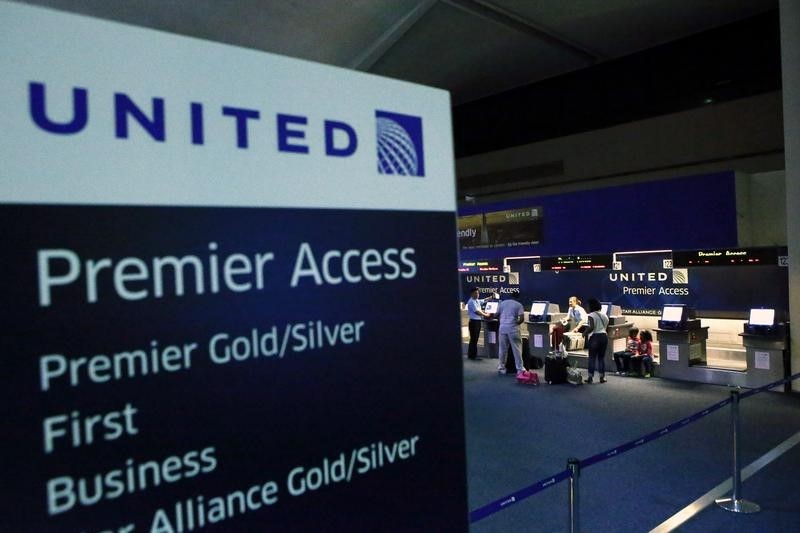
United Airlines Holdings Inc. (NASDAQ:UAL) has emerged as a focal point for investors evaluating opportunities in the airline sector as the company pursues an aggressive fleet expansion strategy while navigating operational challenges. The carrier’s recent financial performance and forward-looking guidance have drawn attention from market observers who see potential in both near-term revenue strength and longer-term cash flow generation.
The airline industry continues to evolve following years of disruption, and United Airlines has positioned itself to capitalize on recovering demand patterns, particularly in higher-margin segments. The company’s strategic initiatives and operational execution have become central themes in assessing its investment merit as it moves through fiscal year 2026.
Recent financial performance and guidance
United Airlines reported solid results for the fourth quarter of 2025, a performance that analysts characterized as resilient given external headwinds. The quarter unfolded against the backdrop of a US government shutdown, which created uncertainty across multiple sectors of the economy. The airline managed to navigate these challenges while maintaining operational stability. With a market capitalization of $32.4 billion and revenue of $60.5 billion over the last twelve months, the company has demonstrated its scale as a prominent player in the passenger airline industry.
Looking ahead, the company provided guidance for both the first quarter of 2026 and the full fiscal year 2026 that exceeded market expectations. This forward outlook has been underpinned by improved unit revenue projections, suggesting that the airline has successfully implemented pricing strategies and capacity management practices that support profitability. According to an InvestingPro tip, the company has been profitable over the last twelve months, with diluted earnings per share of $11.21. Unit revenue, a key metric measuring revenue per available seat mile, serves as an important indicator of an airline’s ability to extract value from its network.
The earnings per share projections reflect a trajectory of growth, with estimates for the first fiscal year reaching 13.50 and advancing to 14.50 in the second fiscal year according to recent analyst assessments. These figures represent meaningful improvement from earlier projections and signal confidence in the company’s ability to expand profitability. The stock currently trades at a P/E ratio of 8.87, though InvestingPro analysis suggests the shares are slightly overvalued relative to its Fair Value estimate. Investors can access comprehensive valuation metrics and 6 additional ProTips on the platform.
Fleet expansion and capacity growth strategy
A cornerstone of United Airlines’ strategic plan involves significant expansion of its aircraft fleet through deliveries from both Boeing and Airbus over the next two years. This dual-manufacturer approach provides the airline with flexibility in fleet composition while potentially mitigating risks associated with production delays from a single supplier.
The anticipated increase in aircraft deliveries is expected to drive net capacity growth, enabling United Airlines to expand its network, increase flight frequencies on existing routes, and potentially enter new markets. Capacity expansion in the airline industry typically requires careful calibration to ensure that supply growth aligns with demand patterns, as excess capacity can pressure yields and profitability.
The fleet expansion represents a substantial capital commitment and reflects management’s confidence in sustained travel demand. The integration of new aircraft into operations requires coordination across multiple departments, from pilot training to maintenance planning, and successful execution will be critical to realizing the benefits of the expanded fleet.
Revenue drivers and market positioning
United Airlines has demonstrated particular strength in premium cabin and corporate travel segments, two categories that typically generate higher margins than economy class leisure travel. The resilience of these segments has provided important revenue support and suggests that business travel has maintained momentum despite broader economic uncertainties.
Premium travel encompasses first class and business class seating, along with premium economy offerings that have become increasingly important to airline revenue mix. Corporate travel represents bookings made by businesses for employee travel, a segment that historically demonstrates less price sensitivity than leisure travel and provides more stable demand patterns.
The company’s ability to capture demand in these higher-value segments reflects both network positioning and product offerings that appeal to business travelers. United Airlines operates significant hub operations in major business centers, providing connectivity that corporate travelers value. The strength in these segments has been identified as a key factor supporting near-term performance. The company’s return on equity stands at 26%, demonstrating efficient capital deployment, though investors should note the debt-to-equity ratio of 1.95 reflects the capital-intensive nature of airline operations.
Unit revenue expectations have improved, indicating that the airline has successfully managed the balance between capacity and pricing. This metric improvement suggests that competitive dynamics have remained rational and that United Airlines has maintained pricing power in its markets.
Cash flow outlook and financial flexibility
For investors focused on longer-term value creation, United Airlines’ free cash flow outlook for 2026 has emerged as a significant consideration. Free cash flow represents the cash generated by operations after accounting for capital expenditures, and it provides a measure of a company’s ability to return value to shareholders, reduce debt, or invest in growth initiatives.
A favorable free cash flow projection suggests that United Airlines expects to generate meaningful cash even while investing in fleet expansion. This financial flexibility could provide the company with options for capital allocation, whether through share repurchases, dividend payments, or debt reduction. Airlines have historically been capital-intensive businesses, and the ability to generate free cash flow while growing the fleet would represent a positive development. For deeper insights into UAL’s cash flow generation and financial health metrics, InvestingPro offers a comprehensive Pro Research Report—one of 1,400+ available for US equities—transforming complex Wall Street data into clear, actionable intelligence.
The cash flow outlook depends on multiple factors, including revenue performance, cost management, fuel prices, and the timing of aircraft deliveries and associated payments. Analysts have identified this as an attractive element for investors with longer investment horizons who prioritize cash generation over near-term earnings volatility.
Industry dynamics and competitive positioning
The airline industry operates within a complex competitive landscape characterized by network effects, hub dominance, and customer loyalty programs. United Airlines competes with other major network carriers for business and premium leisure travelers while also facing competition from low-cost carriers in certain markets.
The company’s hub-and-spoke network model provides competitive advantages in terms of connectivity and market reach. Major hubs enable airlines to aggregate demand from multiple origin points and efficiently serve diverse destinations. This network structure supports the corporate and premium travel segments where United Airlines has demonstrated strength. The company has achieved revenue growth of 4.7% over the last twelve months, reflecting successful execution of its network strategy.
Broader industry trends include continued recovery in international travel, evolution of business travel patterns, and ongoing focus on operational reliability. Airlines that can deliver consistent on-time performance while providing competitive products in premium cabins have positioned themselves favorably in the current environment.
The capacity growth planned by United Airlines will occur within this competitive context, and the company’s ability to deploy additional capacity profitably will depend on market conditions and competitive responses from other carriers.
Bear Case
Can external disruptions continue to pressure operational performance?
United Airlines demonstrated resilience during the fourth quarter of 2025 when faced with a US government shutdown, but this event highlighted the airline’s exposure to external factors beyond management control. Government shutdowns can affect travel patterns, create uncertainty for corporate travel planners, and potentially disrupt airport operations if federal employees face furloughs. The airline industry remains vulnerable to geopolitical events, economic slowdowns, regulatory changes, and public health concerns that can rapidly alter demand patterns.
The company’s operations depend on complex systems involving air traffic control, security screening, customs and immigration processing, and other government functions. Extended disruptions to these systems could create operational challenges that affect customer satisfaction and financial performance. Airlines operate with relatively fixed cost structures in the near term, meaning that demand disruptions can quickly flow through to profitability. Investors must consider whether the current guidance adequately accounts for potential external shocks that could materialize during fiscal year 2026.
Will fleet expansion costs and execution risks undermine margin improvement?
The ambitious fleet expansion plan involving deliveries from both Boeing and Airbus represents a significant undertaking that carries execution risks and near-term cost pressures. Integrating new aircraft types requires substantial investment in pilot training, maintenance capabilities, spare parts inventory, and ground equipment. The airline must coordinate the phase-in of new aircraft while potentially retiring older planes, a process that can create temporary inefficiencies.
Capital expenditures associated with aircraft deliveries will consume cash and could limit financial flexibility if revenue performance disappoints. The airline industry has historically struggled with overcapacity situations where supply growth exceeds demand growth, leading to fare wars and margin compression. If United Airlines and its competitors all add significant capacity simultaneously, the resulting supply-demand imbalance could pressure unit revenues and undermine the positive guidance provided by management. The execution of fleet expansion while maintaining operational reliability and cost discipline represents a meaningful challenge that could affect financial outcomes.
Bull Case
Can premium and corporate travel strength sustain revenue momentum?
United Airlines has demonstrated notable strength in premium cabin and corporate travel segments, two categories that provide disproportionate contribution to profitability. The resilience of business travel despite the rise of remote work and video conferencing suggests that in-person meetings, client visits, and corporate events remain essential business activities. Premium leisure travelers have also shown willingness to pay for enhanced comfort and service, expanding the addressable market beyond traditional business travelers.
The company’s network positioning in major business centers and its product offerings in premium cabins have enabled it to capture this high-value demand effectively. If corporate travel continues to recover and premium leisure demand remains robust, United Airlines could sustain strong unit revenue performance even as it adds capacity. The airline’s ability to fill premium seats at attractive yields would support margin expansion and drive earnings growth. Loyalty programs and corporate contracts provide some revenue stability and visibility, reducing dependence on volatile leisure demand. The guidance for fiscal year 2026 reflects confidence in these revenue trends, and sustained strength in premium segments could enable the company to exceed current projections.
Will capacity expansion drive market share gains and operational leverage?
The planned fleet expansion positions United Airlines to capture a larger share of growing travel demand while potentially improving network connectivity and efficiency. Additional aircraft enable the airline to increase frequencies on popular routes, which business travelers value, and to enter new markets that were previously underserved. Increased scale can drive operational leverage as fixed costs are spread across more available seat miles.
The dual-manufacturer approach with Boeing and Airbus provides flexibility and potentially reduces delivery risk compared to reliance on a single supplier. If the airline successfully integrates new aircraft and deploys capacity strategically, it could strengthen competitive positioning in key markets and improve financial performance. The favorable free cash flow outlook for 2026 suggests that management expects to generate strong returns on the fleet investment. Airlines that grow capacity profitably during industry upturns can create lasting competitive advantages through network effects and customer loyalty. The combination of capacity growth and unit revenue improvement could drive earnings per share growth that exceeds current analyst projections, particularly if the company executes the expansion efficiently while maintaining cost discipline.
SWOT Analysis
Strengths
- Strong performance in premium cabin and corporate travel segments generating higher margins
- Solid fourth quarter 2025 results demonstrating operational resilience
- Favorable free cash flow outlook for fiscal year 2026 providing financial flexibility
- Strategic fleet expansion plan with deliveries from multiple manufacturers
- Improved unit revenue expectations supporting profitability
- Hub network positioning in major business centers
Weaknesses
- Exposure to external disruptions including government shutdowns and geopolitical events
- Execution risks associated with integrating significant fleet expansion
- Capital-intensive business model requiring substantial ongoing investment
- Fixed cost structure creating vulnerability to demand fluctuations
- Complexity of dual-manufacturer fleet integration
Opportunities
- Net capacity growth enabling market share expansion and network enhancement
- Aircraft deliveries from Boeing and Airbus over next two years supporting growth
- Continued recovery in business and international travel demand
- Potential for margin expansion through premium segment strength
- Operational leverage from increased scale as fleet expands
- Strategic deployment of capacity in underserved or high-demand markets
Threats
- Industry overcapacity if multiple carriers expand simultaneously
- Competitive pressures on pricing and yields in key markets
- Economic slowdown affecting corporate travel budgets
- Fuel price volatility impacting operating costs
- Regulatory changes affecting airline operations
- Aircraft delivery delays from manufacturers
- Integration challenges and cost overruns from fleet expansion
Analyst Targets
- Barclays Capital Inc.: USD 150.00 price target, Overweight rating - January 21st, 2026
- Barclays Capital Inc.: USD 135.00 price target, Overweight rating - October 22nd, 2025
This analysis is based on information available from October 2025 through January 2026.
InvestingPro: Smarter Decisions, Better Returns
Gain an edge in your investment decisions with InvestingPro’s in-depth analysis and exclusive insights on UAL. Our Pro platform offers fair value estimates, performance predictions, and risk assessments, along with additional tips and expert analysis. Explore UAL’s full potential at InvestingPro.
Should you invest in UAL right now? Consider this first:
Investing.com’s ProPicks, an AI-driven service trusted by over 130,000 paying members globally, provides easy-to-follow model portfolios designed for wealth accumulation. Curious if UAL is one of these AI-selected gems? Check out our ProPicks platform to find out and take your investment strategy to the next level.
To evaluate UAL further, use InvestingPro’s Fair Value tool for a comprehensive valuation based on various factors. You can also see if UAL appears on our undervalued or overvalued stock lists.
These tools provide a clearer picture of investment opportunities, enabling more informed decisions about where to allocate your funds.
This article was generated with the support of AI and reviewed by an editor. For more information see our T&C.


