Gold edges higher near $4,200 as traders weigh energy truce, Mideast risks
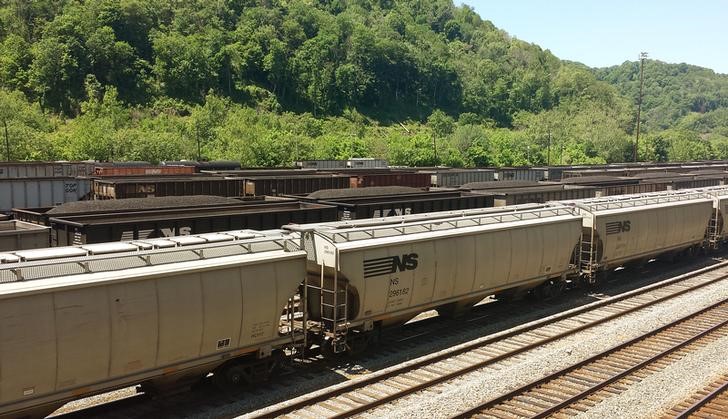
CSX Corporation, a leading rail-based freight transportation company in North America, finds itself at a crossroads as analysts debate whether its recent strong performance has left the stock overvalued or whether operational improvements will continue to drive returns. The railroad operator has experienced significant share price appreciation while navigating a challenging macroeconomic environment characterized by limited industrial growth and volatile fuel costs.
Recent Performance and Valuation Concerns
The railroad company’s shares have surged 51% from their 52-week low as of March 2026, prompting questions about whether the stock has run too far too fast. This substantial appreciation has pushed CSX’s valuation multiples to the second-highest level in the industry, trailing only Norfolk Southern Corporation. The strong performance reflects investor enthusiasm about operational improvements and productivity gains under new leadership.
Analysts note that the current valuation already incorporates much of the company’s potential upside, with limited additional premium expected even from potential industry consolidation scenarios. The high multiples suggest that investors have priced in optimistic expectations for future performance, creating a more challenging environment for further stock appreciation.
Operational Improvements Under New Leadership
CSX has undergone significant operational transformation under its new chief executive officer, who has implemented changes aimed at improving efficiency and productivity. These efforts have begun to show results in the company’s operations, with analysts recognizing the progress made in streamlining processes and enhancing service quality.
The management team has placed renewed emphasis on efficiency improvements, which analysts view as a critical factor in the company’s ability to generate industry-leading earnings per share growth. This focus on operational excellence comes at a time when the broader freight transportation sector faces headwinds from weak industrial activity.
Macroeconomic Headwinds and Market Conditions
The current economic environment presents mixed signals for CSX’s business prospects. The lack of macro industrial growth has tempered the near-term outlook for freight volumes, as manufacturing activity remains subdued. This weakness in industrial production directly impacts demand for rail transportation services, creating uncertainty about revenue growth potential in the coming quarters.
Geopolitical tensions have driven fuel prices significantly higher, creating both challenges and complexities for the railroad operator. The surge in crude oil prices impacts short-term earnings per share through higher operating costs. The company utilizes fuel cost pass-through mechanisms with customers, which helps mitigate the financial impact but creates optical effects on operating ratios. These pass-through arrangements mean that while fuel price increases flow through to customers, they temporarily inflate both revenues and costs, making efficiency metrics appear worse than underlying operational performance would suggest.
Despite these macroeconomic uncertainties, rail volumes are expected to exceed initial expectations. This positive development suggests that CSX may be gaining market share or benefiting from modal shifts as customers seek alternatives to other transportation methods.
Financial Outlook and Earnings Projections
The fourth quarter of fiscal year 2025 proved slightly underwhelming for CSX, with results affected by several one-time items that clouded the underlying operational performance. These non-recurring factors made it difficult for investors to assess the true health of the business and contributed to questions about near-term momentum.
Looking ahead to fiscal year 2026, analysts project earnings per share of $1.85, with growth expected to accelerate to $2.08 in fiscal year 2027. The full-year 2026 outlook aligns with consensus expectations, particularly at the higher end of the guidance range, suggesting that management maintains confidence in the company’s ability to deliver results despite challenging conditions.
The potential for industry-leading earnings per share growth remains intact, supported by operational improvements and productivity gains. Analysts emphasize that while fuel price volatility may create short-term noise in reported results, the impact on long-term earnings before interest and taxes and earnings per share should be limited. The company’s ability to pass through fuel costs to customers provides a degree of protection against sustained commodity price increases.
Bear Case
Can CSX justify its premium valuation amid limited industrial growth?
The railroad operator trades at valuation multiples that rank second-highest in the industry, reflecting investor optimism about its turnaround potential. This premium valuation becomes increasingly difficult to justify when considering the challenging macroeconomic backdrop. The absence of industrial growth means that volume increases must come from market share gains or modal shifts rather than overall market expansion, making revenue growth more difficult to achieve.
The 51% share price appreciation from the 52-week low suggests that much of the good news about operational improvements has already been incorporated into the stock price. With limited additional premium expected from potential consolidation scenarios, the path to further meaningful appreciation appears constrained. Investors who purchase shares at current levels may face an extended period of muted returns if the company’s operational improvements fail to exceed already-elevated expectations.
Will fuel price volatility and one-time items continue to pressure margins?
The surge in fuel prices driven by geopolitical tensions creates ongoing uncertainty for CSX’s reported profitability metrics. While the company can pass through fuel costs to customers, the optical impact on operating ratios remains significant. This dynamic makes it challenging for investors to assess true operational performance and could lead to periods of stock price volatility as quarterly results are released.
The fourth quarter of fiscal year 2025 demonstrated how one-time items can obscure underlying business trends and disappoint investors expecting cleaner results. If the company continues to experience non-recurring charges or unusual items, confidence in management’s execution may erode. The combination of fuel volatility and potential one-time items creates a risk that reported results will consistently fall short of expectations, even if core operations continue to improve.
Bull Case
Can operational improvements drive industry-leading EPS growth?
CSX’s new leadership team has demonstrated a commitment to operational excellence and efficiency improvements that could position the company for sustained earnings growth. The progress made in enhancing productivity and streamlining operations provides a foundation for margin expansion even in a challenging volume environment. If management can continue to execute on its efficiency initiatives, the company may be able to deliver industry-leading earnings per share growth that justifies current valuation levels.
The projected acceleration in earnings per share from $1.85 in fiscal year 2026 to $2.08 in fiscal year 2027 represents substantial growth that would support the stock’s premium valuation. As operational improvements compound over time, the company could generate returns that exceed investor expectations and drive further stock appreciation. The focus on efficiency becomes particularly valuable in a low-growth environment, as cost reductions directly translate to earnings growth without requiring volume increases.
Will management’s efficiency focus overcome macroeconomic headwinds?
The railroad operator’s emphasis on operational efficiency provides a degree of insulation from macroeconomic weakness. While industrial growth remains subdued, the company’s ability to improve service quality and reduce costs can drive earnings growth independent of volume trends. This operational leverage means that even modest volume improvements could translate into significant earnings gains.
Rail volumes are expected to exceed expectations despite macroeconomic uncertainties, suggesting that CSX may be winning business from competitors or benefiting from long-term structural shifts in freight transportation. If the company can maintain this volume momentum while continuing to enhance efficiency, the combination could produce results that surprise to the upside. The fuel cost pass-through mechanisms, while creating optical challenges for operating ratios, ultimately protect the company from sustained commodity price increases and allow management to focus on controllable aspects of the business.
SWOT Analysis
Strengths
- Improved operational performance under new chief executive officer leadership
- Strong productivity gains and efficiency improvements
- Industry-leading earnings per share growth potential
- High valuation multiples reflecting market confidence in turnaround
- Fuel cost pass-through mechanisms protecting margins from commodity volatility
- Rail volumes exceeding expectations despite weak macro conditions
Weaknesses
- Premium valuation limiting further upside potential
- Fourth quarter fiscal year 2025 underwhelming performance
- One-time items obscuring underlying operational trends
- Operating ratio optical impact from fuel cost pass-through creating confusion
- High multiples creating elevated expectations that may be difficult to meet
Opportunities
- Continued efficiency improvements from management initiatives
- Market share gains in challenging industrial environment
- Modal shifts from other transportation methods to rail
- Potential for consolidation premium if industry restructuring occurs
- Margin expansion through operational leverage as volumes improve
Threats
- Lack of macro industrial growth limiting volume expansion
- Fuel price volatility from geopolitical tensions creating earnings uncertainty
- Macroeconomic uncertainties affecting customer demand
- Limited additional valuation premium available at current multiples
- Risk of disappointing results if operational improvements plateau
Analyst Targets
Evercore ISI - March 19, 2026: Rating downgraded to In Line from Outperform (no price target provided)
Barclays Capital Inc. - January 23, 2026: Overweight rating with price target of $40.00
This analysis is based on information available from January 2026 through March 2026.
InvestingPro: Smarter Decisions, Better Returns
Gain an edge in your investment decisions with InvestingPro’s in-depth analysis and exclusive insights on CSX. Our Pro platform offers fair value estimates, performance predictions, and risk assessments, along with additional tips and expert analysis. Explore CSX’s full potential at InvestingPro.
Should you invest in CSX right now? Consider this first:
Investing.com’s ProPicks, an AI-driven service trusted by over 130,000 paying members globally, provides easy-to-follow model portfolios designed for wealth accumulation. Curious if CSX is one of these AI-selected gems? Check out our ProPicks platform to find out and take your investment strategy to the next level.
To evaluate CSX further, use InvestingPro’s Fair Value tool for a comprehensive valuation based on various factors. You can also see if CSX appears on our undervalued or overvalued stock lists.
These tools provide a clearer picture of investment opportunities, enabling more informed decisions about where to allocate your funds.
This article was generated with the support of AI and reviewed by an editor. For more information see our T&C.


