Oil slips as Trump’s sanction waiver may lead to more Russian fuel supplies
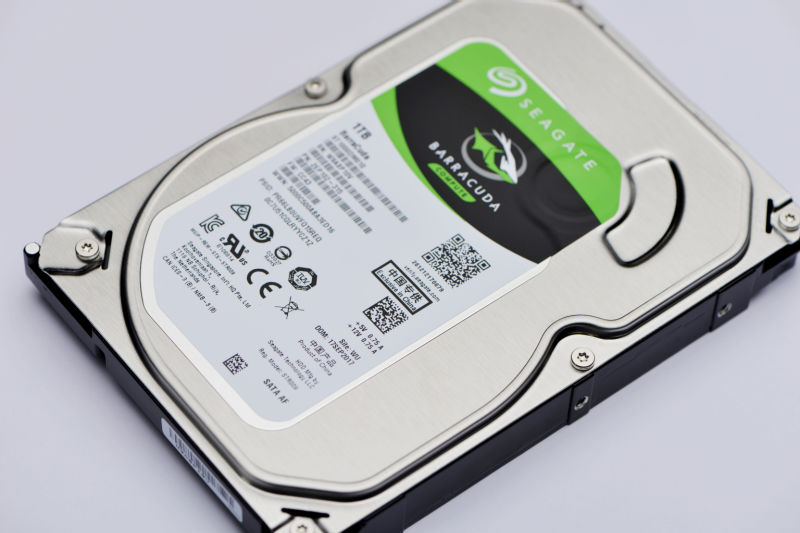
Seagate Technology plc (NASDAQ:STX) has emerged as a focal point in the data storage sector as analysts track the company’s evolution through a period of technological transition and favorable market dynamics. The hard disk drive manufacturer has seen its analyst price targets climb substantially through the first half of 2026, reflecting growing confidence in the company’s strategic positioning and execution capabilities.
The trajectory of analyst sentiment toward Seagate illustrates a notable shift in expectations. Between late January and late May 2026, price targets from major financial institutions increased from $425 to $1,000, representing more than a doubling of projected value in just four months. This progression reflects both improving market conditions in the hard disk drive sector and increasing recognition of the company’s technological advancements. The stock currently trades at $868, with the company’s market capitalization reaching $196.45 billion. Over the past year, shares have delivered a remarkable 490% return, though InvestingPro analysis suggests the stock is overvalued relative to its Fair Value estimate—a consideration for investors evaluating entry points at current levels.
Technology transitions drive competitive positioning
At the center of Seagate’s strategic narrative stands Heat Assisted Magnetic Recording technology, commonly known as HAMR. This advanced storage technology represents a significant leap in data storage efficiency, enabling higher capacity drives while potentially reducing costs per terabyte. The technology uses laser-assisted recording to achieve storage densities that conventional perpendicular magnetic recording cannot reach.
Analysts note that Seagate has successfully added new customers for its HAMR technology, expanding the commercial footprint of what was previously a nascent product category. The addition of customers signals market validation of the technology and suggests that data center operators view HAMR as a viable solution for their expanding storage needs. The technology transitions are identified as key drivers for earnings growth, though they also introduce execution risk if adoption proceeds slower than anticipated.
The company’s approach to technology deployment appears measured and deliberate. Rather than rushing to market with unproven solutions, Seagate has maintained what analysts describe as a steadfast supply strategy. This disciplined approach aims to balance market demand with production capabilities, potentially avoiding the boom-bust cycles that have historically characterized the semiconductor and storage industries.
Market dynamics favor supply discipline
The hard disk drive sector is experiencing what analysts characterize as tight supply conditions. This environment has created favorable pricing dynamics for manufacturers who can meet demand while maintaining production discipline. Unlike spot-driven markets where prices fluctuate rapidly based on immediate supply and demand imbalances, Seagate has positioned itself with long-term agreements that provide greater revenue visibility.
These long-term contracts are anchored to nearline HDD demand, which refers to storage systems that provide relatively quick access to data that is not needed immediately but must be available within seconds or minutes. Nearline storage occupies a middle ground between high-performance primary storage and cold storage archives, making it essential for cloud service providers and large data centers.
The contract structure provides Seagate with better visibility into future revenue streams compared to competitors more exposed to spot market volatility. Analysts project that new contract pricing toward the end of 2026 will leverage favorable pricing opportunities, though the exact timing and magnitude of these benefits remain subject to market conditions.
Financial performance and margin expansion potential
The financial outlook for Seagate has evolved considerably as analysts incorporate improving market conditions and operational execution into their models. In January 2026, fiscal year projections showed estimated earnings per share of $12.82 for the first fiscal year and $17.63 for the second fiscal year. By April 2026, analysts were modeling a calendar year 2028 base case EPS of $29, with a bullish scenario reaching $45. The company’s recent performance shows diluted EPS of $10.56 over the last twelve months, with revenue growing 29% year-over-year. According to InvestingPro Tips, analysts anticipate continued sales growth, and the company has remained profitable over the last twelve months. The stock’s current P/E ratio of 81 reflects elevated market expectations embedded in the valuation. Investors can access the comprehensive Pro Research Report for STX, which distills complex Wall Street data into clear, actionable intelligence—one of 1,400+ reports available on InvestingPro.
The wide range between base and bullish scenarios reflects uncertainty around two key variables: pricing growth for nearline storage measured in dollars per terabyte, and operating margin expansion. In the base case scenario, analysts assume nearline dollars per terabyte will grow at an 8 percent compound annual growth rate, with operating margins reaching 51 percent. The bullish scenario envisions a 16 percent compound annual growth rate for nearline pricing and operating margins hitting 55 percent.
These margin targets represent substantial improvement from historical levels and would position Seagate among the most profitable companies in the data storage sector. The path to such margins depends on successful execution of technology transitions, favorable pricing conditions, and operational efficiency gains. The company’s ability to reduce costs through higher-capacity drives enabled by HAMR technology could prove instrumental in achieving these targets.
Pricing dynamics and contract negotiations
The relationship between DRAM and NAND flash memory pricing and hard disk drive contracts introduces complexity into Seagate’s outlook. Analysts note that the impact of price inflections in the DRAM and NAND markets may be delayed in their effect on HDD contracts. This lag occurs because long-term agreements typically include pricing formulas that adjust gradually rather than responding immediately to spot market movements in adjacent technologies.
This dynamic creates both opportunity and risk. On one hand, if DRAM and NAND prices rise sharply, HDD solutions may become relatively more attractive on a cost-per-terabyte basis, potentially driving increased demand. On the other hand, if Seagate’s contracts do not allow for rapid pricing adjustments, the company might not capture the full benefit of favorable market shifts as quickly as investors might hope.
The anticipated contract negotiations toward the end of 2026 represent a critical inflection point. These discussions will likely determine pricing levels for significant volumes of nearline HDD shipments in subsequent years. The tight supply conditions prevailing in mid-2026 suggest Seagate may have leverage in these negotiations, though the actual outcomes will depend on competitive dynamics and customer alternatives.
Valuation considerations and market expectations
The substantial increase in price targets through the first half of 2026 raises questions about how much positive news is already incorporated into market expectations. Analysts acknowledge that current valuations factor in substantial growth assumptions. The progression from a market capitalization of approximately $79.39 billion in January 2026 to higher valuations implied by subsequent price targets reflects not just improving fundamentals but also expanding valuation multiples.
This valuation expansion suggests investors are willing to pay more for each dollar of Seagate’s earnings based on confidence in the durability and quality of those earnings. The long-term contract structure contributes to this perception by reducing revenue volatility. The technology leadership position implied by HAMR adoption may also command a premium valuation if investors believe it provides sustainable competitive advantages. InvestingPro’s Financial Health score rates the company as "GREAT" overall, though the platform’s Relative Value Score of 1.07 signals stretched valuations. For those concerned about premium pricing, InvestingPro tracks the most overvalued stocks in the market, providing context for valuation decisions.
The dependence on market conditions and technological execution remains a consideration. If technology transitions encounter unexpected obstacles, or if supply conditions loosen more rapidly than anticipated, the premium valuations could compress. The neutral industry view maintained by some analysts suggests caution about extrapolating recent positive trends too far into the future.
Bear Case
Can pricing power erode as supply conditions normalize?
The favorable pricing environment that has supported Seagate’s improving outlook depends substantially on tight supply conditions in the hard disk drive market. If capacity additions by Seagate or competitors outpace demand growth, the pricing leverage that underpins optimistic financial projections could diminish. The hard disk drive industry has historically experienced cyclical swings as manufacturers adjust production in response to price signals, sometimes overshooting in both directions.
The long-term contracts that currently provide revenue visibility could become a constraint if spot market prices decline while Seagate remains committed to higher contracted volumes. Customers might seek to renegotiate terms or reduce future commitments if alternative storage solutions become more cost-competitive. The delayed impact of DRAM and NAND price movements on HDD contracts means Seagate might not benefit immediately from favorable shifts in relative pricing between storage technologies, potentially allowing competitors using different business models to gain market share.
Will HAMR technology adoption meet aggressive timelines?
The bullish projections for Seagate’s financial performance rely heavily on successful deployment and adoption of HAMR technology. While the company has added new customers, the technology remains relatively new in commercial production. Manufacturing yields, reliability in field deployments, and customer acceptance all represent potential obstacles to the aggressive adoption curves embedded in optimistic scenarios.
If HAMR technology encounters technical challenges that slow deployment, or if customers prove reluctant to adopt the new technology at scale, Seagate’s ability to achieve the cost reductions and capacity improvements that drive margin expansion could be compromised. Competitors pursuing alternative approaches to increasing storage density might achieve similar results through different technological paths, potentially eroding any first-mover advantages Seagate has established. The substantial increase in price targets through 2026 suggests expectations have risen considerably, creating room for disappointment if execution falls short of these elevated benchmarks.
Bull Case
How will technology leadership translate to sustainable margins?
Seagate’s investment in HAMR technology positions the company at the forefront of storage density improvements in the hard disk drive sector. As data center operators and cloud service providers seek to reduce the physical footprint and power consumption of their storage infrastructure, higher-capacity drives become increasingly valuable. HAMR enables Seagate to offer solutions that address these needs more effectively than conventional recording technologies.
The margin expansion potential from HAMR extends beyond simple cost reduction. Higher-capacity drives command premium pricing in the market because they reduce the number of drive bays, power supplies, and cooling infrastructure required for a given amount of storage. If Seagate can maintain technology leadership through continued HAMR development, the company may sustain pricing power even as overall industry supply conditions normalize. The addition of new HAMR customers demonstrates market validation and suggests the technology is moving beyond early adoption into broader commercial acceptance.
Can long-term contracts provide stability through market cycles?
The structure of Seagate’s business, with substantial revenue anchored in long-term agreements, provides insulation from the volatility that characterizes spot-driven markets. This stability allows for more predictable financial planning and potentially supports higher valuation multiples as investors value earnings visibility. The contracts tied to nearline HDD demand align Seagate with one of the fastest-growing segments of the storage market, driven by the continued expansion of cloud computing and data-intensive applications.
As contract negotiations approach toward the end of 2026, Seagate enters discussions from a position of strength given tight supply conditions and demonstrated technology leadership. If the company can secure favorable terms that lock in pricing improvements for multiple years, the financial benefits could extend well beyond the immediate contract period. The combination of volume commitments from large customers and pricing that reflects the value of advanced technology could drive the operating margin expansion toward the 51 percent to 55 percent range that analysts envision in their models.
SWOT Analysis
Strengths
- Advanced HAMR technology providing competitive differentiation in storage density
- Long-term contract structure offering revenue visibility and reduced volatility
- Disciplined supply strategy avoiding overproduction and price deterioration
- Expanding customer base for next-generation storage solutions
- Potential for substantial operating margin expansion from current levels
Weaknesses
- Dependence on successful execution of complex technology transitions
- Current valuations already incorporate optimistic growth assumptions
- Limited ability to respond quickly to spot market price movements due to contract structure
- Reliance on continued tight supply conditions to maintain pricing power
Opportunities
- Growing nearline storage demand driven by cloud computing expansion
- Pricing leverage in upcoming contract negotiations at year-end 2026
- Cost reduction potential through higher-capacity drives enabled by HAMR
- Market share gains if HAMR technology proves superior to alternative approaches
- Margin expansion toward 51-55 percent operating margin targets
Threats
- Technology adoption risks if HAMR deployment encounters obstacles
- Potential supply normalization reducing pricing leverage
- Delayed impact of DRAM and NAND price movements on HDD contract economics
- Neutral broader industry view suggesting limited sector-wide tailwinds
- Competitive responses from rivals developing alternative storage technologies
Analyst Targets
- Barclays: May 27, 2026 - Price target $1,000
- BofA Global Research: April 27, 2026 - Price target $700
- Barclays Capital Inc.: January 28, 2026 - Price target $425, Equal Weight rating
This analysis is based on analyst reports and market data from January 2026 through May 2026.
InvestingPro: Smarter Decisions, Better Returns
Gain an edge in your investment decisions with InvestingPro’s in-depth analysis and exclusive insights on STX. Our Pro platform offers fair value estimates, performance predictions, and risk assessments, along with additional tips and expert analysis. Explore STX’s full potential at InvestingPro.
Should you invest in STX right now? Consider this first:
Investing.com’s ProPicks, an AI-driven service trusted by over 130,000 paying members globally, provides easy-to-follow model portfolios designed for wealth accumulation. Curious if STX is one of these AI-selected gems? Check out our ProPicks platform to find out and take your investment strategy to the next level.
To evaluate STX further, use InvestingPro’s Fair Value tool for a comprehensive valuation based on various factors. You can also see if STX appears on our undervalued or overvalued stock lists.
These tools provide a clearer picture of investment opportunities, enabling more informed decisions about where to allocate your funds.
This article was generated with the support of AI and reviewed by an editor. For more information see our T&C.


