TSX ekes out gain as weak services data tempers investor sentiment
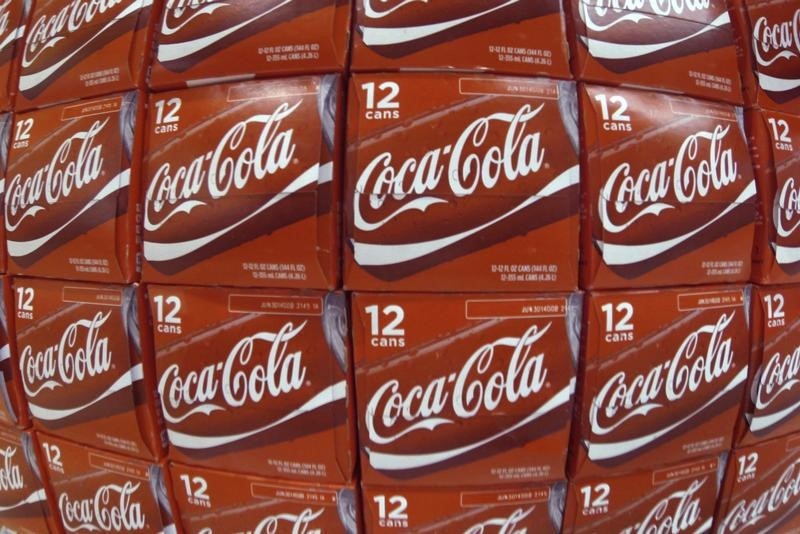
The Coca-Cola Company continues to attract positive attention from Wall Street analysts as the beverage giant advances strategic initiatives centered on premium product expansion and pricing discipline. Multiple investment firms have reaffirmed favorable ratings on the stock through mid-2026, pointing to the company’s Fairlife brand as a transformative growth engine and highlighting competitive advantages in pricing power that distinguish it from industry peers.
Strategic positioning in beverage market
Coca-Cola maintains its position as a leading global beverage company with a diversified portfolio that spans traditional carbonated soft drinks, premium dairy products, and emerging beverage categories. Analysts emphasize the company’s ability to leverage its extensive distribution infrastructure while simultaneously expanding into higher-growth segments that command premium pricing.
The company’s strategic focus has shifted notably toward its Fairlife brand, a premium dairy product line that represents a departure from traditional carbonated beverages. This pivot reflects broader industry trends as consumer preferences evolve toward products perceived as healthier alternatives to conventional soft drinks.
Fairlife brand emerges as growth catalyst
The Fairlife brand has emerged as a central component of Coca-Cola’s growth strategy, with analysts projecting substantial contributions to overall company performance. The premium dairy product line is expected to represent 4-5% of Coca-Cola’s total sales mix while generating organic sales growth in the range of 20-25%, significantly outpacing the company’s overall growth rate.
To support anticipated demand, Coca-Cola has committed to a 30% capacity increase for Fairlife production by 2026. This expansion represents a substantial capital commitment and signals management’s confidence in sustained consumer demand for the premium product category.
Analysts note that Fairlife’s distribution network is expected to expand by 25% in 2026, with the brand gaining access to new retail channels including convenience stores and food service establishments. This distribution expansion is projected to add more than 2 percentage points to North American organic sales in 2026, with an additional percentage point contribution anticipated in 2027.
The Fairlife initiative demonstrates Coca-Cola’s ability to identify and capitalize on shifting consumer preferences while leveraging existing distribution capabilities to accelerate market penetration for new product categories.
Pricing power differentiates from competitors
Analysts consistently highlight Coca-Cola’s superior pricing power relative to consumer packaged goods peers, including PepsiCo and Keurig Dr Pepper. This pricing advantage stems from strong brand equity, effective marketing strategies, and rational pricing discipline that avoids aggressive discounting or promotional activity that could erode margins.
The company’s pricing strategy has proven particularly effective in maintaining volume growth while simultaneously capturing price increases. This dual achievement—volume expansion coupled with pricing gains—represents a challenging balance that many consumer goods companies struggle to maintain.
Coca-Cola’s approach to pricing is characterized as rational and sustainable, avoiding the short-term revenue boosts that often come at the expense of long-term brand value. This disciplined approach has allowed the company to outperform peers in organic sales growth while maintaining healthy profit margins. According to InvestingPro data, the company’s gross profit margin stands at an impressive 61.74%, demonstrating its ability to command premium pricing while managing costs effectively. This pricing discipline has also supported the company’s remarkable track record of raising dividends for 55 consecutive years, underscoring management’s confidence in sustainable cash generation.
Emerging markets provide growth runway
Approximately 33% of Coca-Cola’s revenue originates from emerging markets, providing exposure to regions characterized by higher population growth rates and expanding middle-class consumer bases. These markets offer structural advantages including superior pricing power and less saturated competitive landscapes compared to developed markets.
The emerging markets exposure positions Coca-Cola to benefit from long-term demographic trends and rising disposable incomes in developing economies. As these markets mature, the company’s established brand presence and distribution infrastructure provide competitive moats that are difficult for rivals to replicate.
Analysts view this geographic diversification as a key factor supporting sustained organic sales growth above industry averages, particularly as mature markets in North America and Western Europe face slower population growth and more intense competitive dynamics.
Financial outlook and earnings trajectory
Coca-Cola’s financial projections reflect steady earnings growth through the fiscal year 2028. Earnings per share estimates begin at $3.00 for fiscal year 2025, advancing to approximately $3.22-3.27 for fiscal year 2026, then progressing to $3.50 in fiscal year 2027 and reaching $3.75 in fiscal year 2028. The company reported diluted EPS of $3.18 for the last twelve months, with revenue of $49.28 billion representing 5.11% growth. For deeper analysis, InvestingPro offers a comprehensive Pro Research Report on Coca-Cola, one of 1,400+ US equities covered with intuitive visuals and expert analysis that transform complex Wall Street data into clear, actionable intelligence.
This earnings trajectory represents consistent annual growth and reflects analysts’ confidence in the company’s ability to execute its strategic initiatives while managing cost pressures and competitive challenges. The projected growth rate aligns with Coca-Cola’s stated algorithmic target of 4-6% top-line growth, with expectations clustering around 5% annual revenue expansion.
The company’s fourth quarter 2025 organic sales growth registered at 4.4%, slightly trailing consensus expectations of 4.8%. While this modest shortfall raised questions about competitive pressures, analysts generally maintained positive outlooks based on the company’s strong brand portfolio and strategic initiatives.
Valuation considerations emerge
Following a significant appreciation in share value, questions have emerged regarding Coca-Cola’s valuation relative to historical averages and peer comparisons. The stock currently trades at $85.23, near its 52-week high of $84.56, having delivered a 20% return over the past year. Analysts acknowledge that the stock trades at a premium to its historical valuation multiples, reflecting market recognition of the company’s competitive advantages and growth initiatives. Trading at a P/E ratio of 26.81 with a PEG ratio of 0.94, InvestingPro analysis indicates the stock is currently overvalued relative to its Fair Value estimate. Investors can access comprehensive valuation analysis and compare KO against other overvalued stocks through the platform’s advanced tools.
The valuation premium places increased emphasis on execution of strategic initiatives, particularly the Fairlife expansion and sustained pricing power. Analysts note that the burden of proof has shifted to the bullish thesis, requiring continued demonstration of superior organic sales growth and earnings expansion to justify current valuation levels.
This valuation dynamic creates a more balanced risk-reward profile than existed at lower price levels, with upside potential becoming more limited even as the fundamental business outlook remains positive.
Bear Case
Can Coca-Cola justify its premium valuation after recent appreciation?
The stock’s significant run-up has compressed potential upside and elevated valuation multiples above historical averages. Investors paying current prices face a more challenging path to attractive returns compared to those who purchased shares at lower valuations. The premium valuation leaves little room for execution missteps or disappointments in key growth initiatives like Fairlife expansion.
If organic sales growth fails to consistently exceed peer performance, or if the Fairlife brand encounters production constraints or distribution challenges, the valuation premium could quickly evaporate. The company must continuously demonstrate superior execution to maintain investor confidence at current price levels, creating a higher bar for success than competitors trading at more modest multiples.
Will competitive pressures limit pricing power and market share gains?
The beverage industry faces intense competition from both traditional rivals like PepsiCo and Keurig Dr Pepper, as well as emerging brands targeting health-conscious consumers. If competitors respond aggressively to Coca-Cola’s pricing strategies or successfully launch competing premium products, the company’s pricing power advantage could diminish.
The fourth quarter 2025 organic sales growth of 4.4%, which fell short of consensus expectations at 4.8%, may signal emerging competitive pressures or consumer resistance to price increases. If this trend continues, Coca-Cola may face difficult choices between maintaining pricing discipline and defending market share through promotional activity, either of which could pressure margins and earnings growth.
Bull Case
How will Fairlife expansion drive sustainable long-term growth?
The planned 30% capacity increase for Fairlife by 2026, combined with 25% distribution expansion, positions the brand to capture significant market share in the growing premium dairy category. With projected organic sales growth of 20-25% for Fairlife and an expanding contribution to overall company sales reaching 4-5% of the total mix, this single brand could add meaningful percentage points to consolidated growth rates.
The expansion into new channels like convenience stores and food service represents substantial untapped market opportunity. As Fairlife gains distribution breadth comparable to Coca-Cola’s core carbonated beverages, the brand could evolve from a growth contributor to a major profit center, potentially justifying current valuation premiums and supporting continued multiple expansion.
Can pricing power sustain earnings momentum across economic cycles?
Coca-Cola’s demonstrated pricing power relative to consumer packaged goods peers provides a durable competitive advantage that should prove resilient across varying economic conditions. The company’s rational pricing approach, strong brand equity, and effective marketing strategies have enabled simultaneous volume growth and price realization—a combination that supports margin expansion and earnings growth.
The significant emerging markets exposure, representing 33% of revenue, provides access to regions where pricing power typically exceeds that available in mature markets. As these economies develop and consumer purchasing power increases, Coca-Cola’s established market position should enable sustained pricing gains that drive earnings growth above developed market peers. The combination of geographic diversification, brand strength, and disciplined pricing strategy creates multiple paths to sustained earnings expansion through fiscal year 2028 and beyond.
SWOT Analysis
Strengths
- Superior pricing power relative to consumer packaged goods peers
- Extensive global distribution infrastructure
- Strong brand equity and marketing capabilities
- Fairlife brand generating 20-25% organic sales growth
- Significant emerging markets presence (33% of revenue)
- Consistent earnings growth trajectory through fiscal year 2028
Weaknesses
- Premium valuation limits upside potential after recent appreciation
- Fourth quarter 2025 organic sales growth slightly below consensus expectations
- Dependence on successful Fairlife capacity expansion execution
- Exposure to mature markets with slower growth dynamics
Opportunities
- 30% Fairlife capacity increase by 2026 to meet growing demand
- 25% Fairlife distribution expansion into convenience and food service channels
- Emerging markets growth driven by population expansion and rising incomes
- Potential for additional premium product launches leveraging distribution capabilities
- Market share gains through sustained pricing discipline
Threats
- Intense competition from PepsiCo, Keurig Dr Pepper, and emerging brands
- Consumer preference shifts toward health-focused alternatives
- Valuation compression risk if execution falls short of expectations
- Economic pressures in emerging markets affecting consumer spending
- Potential margin pressure from commodity cost inflation
Analyst Targets
- Morgan Stanley & Co. LLC: $89.00 price target, Overweight rating - June 10, 2026
- Evercore ISI: Outperform rating - April 29, 2026
- Jefferies: $90.00 price target, Buy rating - March 16, 2026
- Barclays Capital Inc.: $77.00 price target, Overweight rating - February 10, 2026
This analysis is based on analyst reports and market data available from February 2026 through June 2026.
InvestingPro: Smarter Decisions, Better Returns
Gain an edge in your investment decisions with InvestingPro’s in-depth analysis and exclusive insights on KO. Our Pro platform offers fair value estimates, performance predictions, and risk assessments, along with additional tips and expert analysis. Explore KO’s full potential at InvestingPro.
Should you invest in KO right now? Consider this first:
Investing.com’s ProPicks, an AI-driven service trusted by over 130,000 paying members globally, provides easy-to-follow model portfolios designed for wealth accumulation. Curious if KO is one of these AI-selected gems? Check out our ProPicks platform to find out and take your investment strategy to the next level.
To evaluate KO further, use InvestingPro’s Fair Value tool for a comprehensive valuation based on various factors. You can also see if KO appears on our undervalued or overvalued stock lists.
These tools provide a clearer picture of investment opportunities, enabling more informed decisions about where to allocate your funds.
This article was generated with the support of AI and reviewed by an editor. For more information see our T&C.


