Musk says SpaceX to change name to ’SpaceXSI’
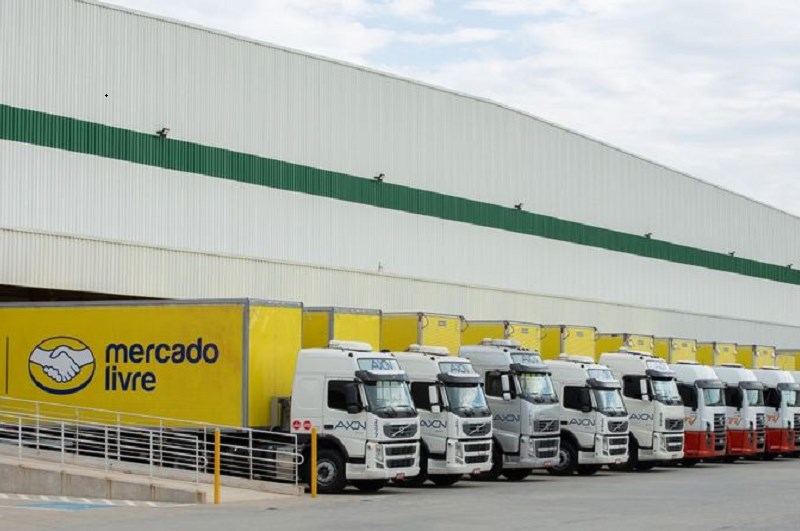
MercadoLibre Inc. (MELI.O), Latin America’s dominant e-commerce and fintech platform, finds itself at a crossroads as the company navigates an extended investment cycle that has prompted analysts to reassess their outlook. The company’s aggressive expansion strategy across multiple verticals has delivered impressive growth metrics but raised concerns about near-term profitability and margin trajectory.
The Latin American technology giant operates across Brazil, Argentina, and Mexico, providing e-commerce marketplace services, digital payments through Mercado Pago, advertising solutions, and logistics infrastructure. As the region’s digital economy continues to mature, MercadoLibre has positioned itself as the primary beneficiary of increasing internet penetration and financial inclusion trends.
Recent downgrade signals shifting sentiment
The most significant development came in mid-May 2026 when analysts downgraded MercadoLibre from Buy to Neutral/High Risk, slashing the price target from $2,200 to $1,950. This marked a notable reversal in sentiment after months of maintaining a positive outlook on the stock. The timing proved prescient, as shares have declined over 35% over the past year, trading at $1,667 compared to a 52-week high of $2,645. According to InvestingPro data, 5 analysts have revised their earnings downwards for the upcoming period, reinforcing concerns about near-term profitability. The downgrade reflected a fundamental reassessment of the company’s ability to achieve margin inflection in the near term.
The revision came alongside substantial cuts to earnings estimates, with fiscal year 2026 projections reduced by 22 percent and fiscal year 2027 estimates lowered by 20 percent. These adjustments stemmed from higher-than-anticipated investment intensity, particularly in shipping costs, cost of goods sold, and credit operations. The duration and magnitude of the investment cycle exceeded initial expectations, creating reduced visibility on the path to margin recovery.
The price target reduction incorporated both discounted cash flow modeling, which suggested a value of $1,900, and a sum-of-the-parts approach yielding $2,000. The valuation methodology reflected the heightened uncertainty surrounding the company’s profitability timeline.
Regional performance shows mixed signals
Brazil, MercadoLibre’s largest market, demonstrated both the promise and challenges facing the company. Daily active user growth in Brazil decelerated to 36 percent year-over-year in January 2026 from 41 percent in December 2025, though this still represented the second-highest growth rate since the implementation of new shipping policies. The company’s decision to lower free shipping thresholds produced positive results, driving acceleration in gross merchandise volume.
Fourth-quarter results showed total GMV growth of 37 percent year-over-year excluding foreign exchange effects, surpassing expectations due to Brazil’s strong performance. The e-commerce acceleration in the country validated the company’s strategy of investing heavily in logistics and customer acquisition, even as these investments pressured margins.
Mexico presented a more stable picture, with monthly active user growth holding steady at 16 percent year-over-year. A notable development saw Mercado Pago outpace competitor NU in monthly active user growth for the first time, signaling the fintech platform’s increasing competitiveness in the Mexican market.
Argentina, while representing a smaller portion of overall operations, showed modest growth with monthly active users expanding 5 percent year-over-year. The planned ramp-up of credit card operations in Argentina raised concerns about near-term pressure on net interest margin after losses, particularly heading into 2026.
Investment cycle intensity exceeds expectations
The company’s strategic investment program has proven more extensive than initially forecast. MercadoLibre has channeled resources into multiple areas simultaneously: marketing campaigns to drive user acquisition, logistics infrastructure to support faster delivery times, credit card product development, and artificial intelligence capabilities to enhance platform functionality.
These investments impacted earnings before interest and taxes margins by approximately five to six percentage points in recent quarters. The company prioritized growth in new verticals beyond its core marketplace, accepting near-term profitability pressures in exchange for longer-term market position strengthening.
The credit portfolio emerged as a particular area of investment focus, with growth accelerating to 90 percent year-over-year. This expansion required substantial capital allocation to support loan origination and risk management infrastructure. Analysts noted a decrease in non-performing loans and expansion of net interest margin after losses, suggesting the credit investments were beginning to show positive risk-adjusted returns.
Fintech operations more broadly demonstrated strong momentum, with acquiring total payment volume growing 40 percent year-over-year excluding foreign exchange effects. The successful launch of the Mercado Pago AI Assistant and implementation of AI-powered bidding algorithms for advertising represented technological advances that could drive future monetization improvements.
Financial projections reflect growth-profitability tradeoff
Sales projections paint a picture of continued robust expansion, with revenue expected to grow from $28.9 billion in fiscal year 2025 to $65.6 billion by fiscal year 2028. The company has already demonstrated impressive momentum, with revenue growth of 42% over the last twelve months reaching $31.8 billion. This trajectory would represent more than a doubling of revenue over a three-year period, underscoring the substantial market opportunity across Latin America.
Profitability metrics tell a more complex story. EBITDA margins are projected to decline to 9.4 percent in 2026 before recovering modestly to 10.6 percent by 2028. This U-shaped margin profile reflects the near-term impact of investments followed by gradual operating leverage gains as the company scales its newer initiatives.
Net income forecasts show growth from $1.9 billion in 2026 to $3.9 billion in 2028, indicating that absolute profitability will continue expanding even as margins face pressure. Earnings per share estimates range from $37.69 in 2024 to $78.43 in 2027, representing substantial growth in per-share profitability over the period.
The company’s valuation remained elevated at over 30 times fiscal year 2027 estimated price-to-earnings ratio, closely aligned with historical averages. Currently trading at a P/E ratio of 44.2, the stock commands a premium that reflects both the company’s growth potential and the status investors have historically assigned to Latin American technology leaders. Despite recent pressure, InvestingPro analysis suggests the stock is undervalued relative to its Fair Value, offering potential upside for patient investors. For deeper insights into MELI’s valuation and access to exclusive ProTips—including 10 additional tips beyond those mentioned here—explore the comprehensive Pro Research Report available for this and 1,400+ other US equities.
Competitive dynamics intensify
MercadoLibre faces increasing competition across its business lines. In e-commerce, platforms like Shopee and Amazon continue to invest in Latin American operations, forcing MercadoLibre to maintain aggressive spending on logistics and customer acquisition to defend market share. The decision to lower free shipping thresholds represented a direct response to competitive pressure, accepting lower margins per transaction to maintain volume growth.
In fintech, traditional banks and digital-native competitors like NU have expanded their offerings, creating a more crowded landscape for payment processing and credit products. The fact that Mercado Pago achieved faster monthly active user growth than NU in Mexico for the first time suggested the company’s investments were yielding competitive advantages, though sustaining this performance would require continued resource allocation.
Advertising revenue acceleration provided a bright spot, with AI-powered bidding algorithms improving advertiser return on investment and driving higher spending on the platform. This represented a higher-margin revenue stream that could partially offset pressures in other business segments.
Bear Case
Can MercadoLibre restore margin expansion while maintaining growth?
The company faces a fundamental tension between growth and profitability that may prove difficult to resolve in the near term. The investment cycle has already extended longer than initially anticipated, and visibility on when margins will inflect remains limited. EBITDA margins declining to 9.4 percent in 2026 would represent a significant compression from historical levels, raising questions about whether the company has adequately balanced growth investments with profitability requirements.
The competitive environment shows no signs of easing, which may force MercadoLibre to maintain elevated spending on logistics, marketing, and product development indefinitely. If competitors continue matching the company’s service improvements, MercadoLibre may find itself in a prolonged period of margin pressure without corresponding market share gains. The 22 percent reduction in fiscal year 2026 earnings estimates and 20 percent cut to fiscal year 2027 projections suggest analysts underestimated the investment intensity required, raising the possibility of further downward revisions if competitive dynamics worsen.
Does the valuation adequately reflect execution risks?
Trading at over 30 times fiscal year 2027 estimated earnings, MercadoLibre commands a premium valuation that assumes successful execution of its multi-year investment strategy. The recent downgrade to Neutral/High Risk and price target reduction to $1,950 reflected growing concerns about whether this premium is justified given reduced margin visibility and monetization challenges.
The company’s expansion into credit cards in Argentina and continued credit portfolio growth create additional risk factors. While credit revenue growth of 90 percent year-over-year appears impressive, this rapid expansion increases exposure to potential credit losses if economic conditions in Latin America deteriorate. The region’s macroeconomic volatility, currency fluctuations, and political uncertainty create external risks that could impact both growth rates and asset quality. Investors paying a premium valuation may face significant downside if the company encounters execution challenges or if the Latin American operating environment weakens.
Bull Case
Will strategic investments create durable competitive advantages?
MercadoLibre’s willingness to accept near-term margin pressure in exchange for market position strengthening could prove strategically sound over a longer time horizon. The investments in logistics infrastructure, particularly the lowering of free shipping thresholds, have already demonstrated positive results with accelerating GMV growth in Brazil. As the company builds out its fulfillment network and improves delivery times, it creates physical infrastructure that competitors would find expensive and time-consuming to replicate.
The fintech expansion represents a particularly compelling opportunity. With acquiring total payment volume growing 40 percent year-over-year and the credit portfolio expanding 90 percent, Mercado Pago is establishing itself as a comprehensive financial services platform. The company’s strong free cash flow yield of 14% and EBITDA of $3.9 billion provide the financial flexibility to sustain these investments while maintaining operational stability. The successful implementation of AI-powered tools, including the Mercado Pago AI Assistant and advertising bidding algorithms, suggests the company is developing technological capabilities that enhance both user experience and monetization. As these investments mature, the company should achieve operating leverage, with revenue growth outpacing cost growth and driving margin expansion beyond 2026.
Can fintech monetization offset e-commerce margin pressures?
The diversification into financial services provides MercadoLibre with multiple revenue streams that carry different margin profiles. While e-commerce marketplace operations face competitive pressure on take rates and shipping costs, fintech services like payment processing, credit products, and wealth management typically generate higher margins once scaled. The decrease in non-performing loans and expansion of net interest margin after losses indicate improving credit quality and risk management capabilities.
Advertising revenue acceleration offers another high-margin growth avenue. As more merchants compete for visibility on the platform and AI-powered tools improve advertising effectiveness, MercadoLibre can capture increasing value from its marketplace ecosystem without proportional cost increases. The combination of payment processing fees, credit interest income, and advertising revenue could collectively offset margin pressures in the core e-commerce business, allowing the company to maintain overall profitability while continuing to invest in logistics and customer acquisition. Sales projections showing growth from $28.9 billion in fiscal year 2025 to $65.6 billion by fiscal year 2028 suggest substantial revenue scaling that should eventually translate to improved profitability metrics.
SWOT Analysis
Strengths
- Dominant market position in Latin American e-commerce with strong brand recognition
- Diversified business model spanning marketplace, payments, advertising, and credit
- Robust GMV growth of 37 percent year-over-year excluding foreign exchange effects
- Rapidly expanding fintech operations with 40 percent growth in acquiring total payment volume
- Credit portfolio growth of 90 percent year-over-year demonstrating strong demand
- Successful implementation of AI-powered tools for advertising and customer service
- Improving credit quality metrics with decreasing non-performing loans
- Strong user growth across key markets in Brazil, Mexico, and Argentina
Weaknesses
- Significant margin pressure with EBITDA margins declining to 9.4 percent in 2026
- Extended investment cycle exceeding initial duration and intensity expectations
- Monetization challenges across business segments
- Reduced visibility on path to margin inflection
- High cash consumption required to fund logistics and credit expansion
- Exposure to foreign exchange volatility across Latin American currencies
- Dependence on continued heavy investment spending to maintain competitive position
Opportunities
- Continued expansion of credit card operations, particularly in Argentina
- Growing digital payment adoption across Latin America as cash usage declines
- Advertising revenue growth as merchant base expands and AI tools improve effectiveness
- Logistics infrastructure investments creating barriers to entry for competitors
- Financial inclusion trends driving demand for accessible credit products
- Cross-selling opportunities between e-commerce and fintech services
- Potential for margin expansion as investments mature and operating leverage improves
- Market share gains in Mexico where Mercado Pago is outpacing key competitors
Threats
- Intensifying competition from Shopee, Amazon, and other e-commerce platforms
- Digital banking competitors like NU expanding financial services offerings
- Macroeconomic volatility in Latin American markets affecting consumer spending
- Currency devaluation risks across operating countries
- Potential for credit losses if economic conditions deteriorate
- Regulatory changes affecting e-commerce or financial services operations
- Extended period of margin pressure if competitive dynamics prevent investment reduction
- Valuation compression if growth rates decelerate or profitability improvements fail to materialize
Analyst Targets
- Citi Research: $1,950 price target, Neutral/High Risk rating - May 13th, 2026
- Cantor Fitzgerald: $2,400 price target, Overweight rating - February 25th, 2026
- Citi Research: $2,600 price target, Buy rating - February 11th, 2026
- Barclays: $2,900 price target, Overweight rating - October 30th, 2025
This analysis is based on analyst reports and financial data from October 2025 through May 2026.
InvestingPro: Smarter Decisions, Better Returns
Gain an edge in your investment decisions with InvestingPro’s in-depth analysis and exclusive insights on MELI. Our Pro platform offers fair value estimates, performance predictions, and risk assessments, along with additional tips and expert analysis. Explore MELI’s full potential at InvestingPro.
Should you invest in MELI right now? Consider this first:
Investing.com’s ProPicks, an AI-driven service trusted by over 130,000 paying members globally, provides easy-to-follow model portfolios designed for wealth accumulation. Curious if MELI is one of these AI-selected gems? Check out our ProPicks platform to find out and take your investment strategy to the next level.
To evaluate MELI further, use InvestingPro’s Fair Value tool for a comprehensive valuation based on various factors. You can also see if MELI appears on our undervalued or overvalued stock lists.
These tools provide a clearer picture of investment opportunities, enabling more informed decisions about where to allocate your funds.
This article was generated with the support of AI and reviewed by an editor. For more information see our T&C.


